Using Google Maps to Optimize Delivery Routes
Using Google Maps to Optimize Delivery Routes

Using Google Maps to Optimize Delivery Routes

By

Ana Lashvili

Published on:

Feb 3, 2026

Field service route management is a challenge many businesses face. If you've ever run a business that involves people on the move like cleaning crews, technicians, or repair teams - you’ve likely asked the same questions: Where is everyone? Are they on time? Are we using our resources as efficiently as we could?

Lots of companies with a reliable team and high customer demand challenge real-time visibility issues. Technicians are running late to jobs, dispatch is overwhelmed with calls, and customer reviews are starting to reflect the delays.

They don’t need another off-the-shelf scheduling app. They needed a reliable, custom-built platform that could track each technician’s location, optimize schedules and routes in real time, and help managers stay in sync with field teams.

We offer solutions built with FlutterFlow (Flutter), WeWeb, Supabase in this example (and any other database that fits the client needs better), and Google Maps.

The Solution for more effective field service route management

Let’s say a technician or a driver finishes a job early or hits unexpected traffic. With our system, the manager doesn’t need to call around or guess, they see it live and adjust the next task instantly. The app reflects the change right away.

Our team applied this same approach while working on the SparkCharge mobile app, which helps coordinate EV charging technicians in the field. When service priorities shift, dispatchers can reassign jobs in real time, and technicians receive updates seamlessly.

Similarly, in our FlutterFlow with Shopify delivery app, we enabled last-mile delivery teams to dynamically update routes based on delivery progress, traffic, or new orders. These real-world solutions are built to match the pace and unpredictability of mobile teams.

Building Blocks: The Tech Behind It

Figma helped us design clean, intuitive interfaces and map out the full user journey before any development began. It provided a solid foundation for a smooth transition into FlutterFlow and WeWeb.

FlutterFlow let us prototype and launch rapidly. UI and core logic were handled visually, but when we needed more control—like smart triggers for GPS updates—we used custom Dart actions.

WeWeb was used to build a responsive, real-time web dashboard for managers and dispatchers or managers. It gave them a clear overview of live technician locations, route progress, and job statuses in a format that works across desktops and tablets.

Supabase acts as our real-time database. It handled authentication, synced technician locations, and stored historical service data for reporting.

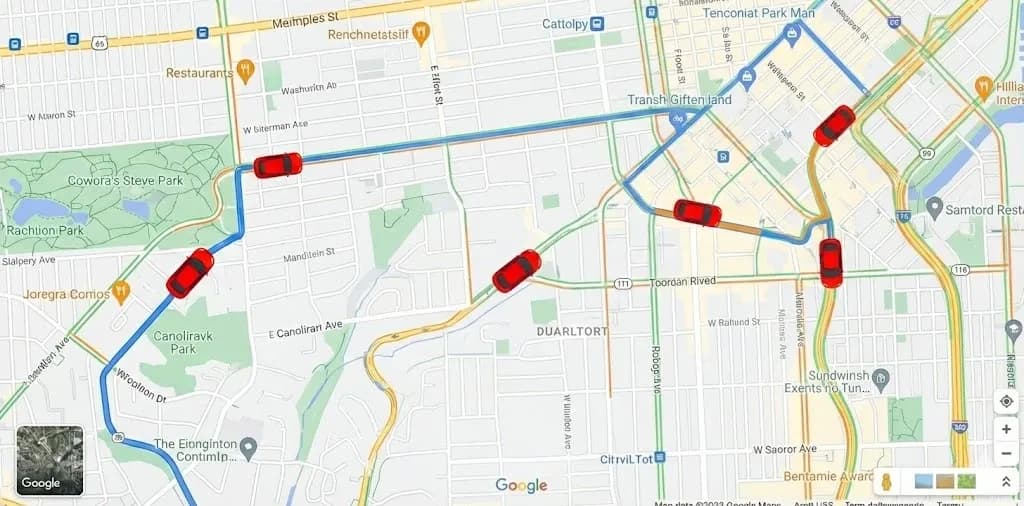
Google Maps API gave us live traffic data, directions, and route rendering. Whether the technician is in Los Angeles, New York City, London, or any other location the app adapts to road conditions instantly.

Not Just Dots on a Map

Tracking is just the beginning. We wanted to elevate the whole field service workflow:

  • Technicians don’t need to second-guess or call dispatch. The app gives them clear directions and adjusts instantly if anything changes.

  • Managers get a complete view of all moving parts—who’s on time, who needs support, and where adjustments can be made.

  • Owners gain visibility into operational efficiency. Every stop, delay, reroute, and job completion is stored and reviewable.

As a result, our clients got 1000+ downloads with successful expansion. This is a clear sign that real-time routing and technical visibility drive both operational growth and customer satisfaction - win-win.

Why We Use This Stack

We’ve tested many combinations, and this stack delivers across the board:

  • Figma for designing a prototype that fits client business needs.

  • FlutterFlow for rapid, beautiful front-end development

  • WeWeb for responsive web dashboards that adapt to operational workflows

  • Supabase for flexible, scalable backend functionality

  • Google Maps for globally accurate, real-time routing

Whether you’re managing three technicians or a regional field team, this approach is scalable, fast, and deeply practical.

What This Means for Your Business

Maybe you’re a driver who’s been dealing with delays, missed updates, or unclear routes—and now you're thinking, “Why doesn't our company have a better system for this?” Or maybe you’re a business owner who’s faced the same challenges from the other side, trying to coordinate a growing field team without the right tools in place.

You already know what’s needed to make it smoother for your field service route management: real-time visibility, faster rerouting, and fewer manual errors.

This app doesn’t replace what you do. It complements it perfectly. Like a burger and cola or wheels and roads, it’s built to support the flow of your operations, not reshape them.

We collaborate with teams to shape a system that fits how they work, not the other way around.

And we’re fast. We move from idea to testable MVP in weeks, not years.

Let’s Build It Together

If you’re reading this because you care about improving how your business operates. That already sets you apart.

Let’s take the next step together—whether it’s refining your dispatch process, building smarter technician workflows, or getting more from the data you already have.

We’ll walk you through how a solution like this can plug into your operations. 

Reach out and let’s talk about what we can build together.

Field service route management is a challenge many businesses face. If you've ever run a business that involves people on the move like cleaning crews, technicians, or repair teams - you’ve likely asked the same questions: Where is everyone? Are they on time? Are we using our resources as efficiently as we could?

Lots of companies with a reliable team and high customer demand challenge real-time visibility issues. Technicians are running late to jobs, dispatch is overwhelmed with calls, and customer reviews are starting to reflect the delays.

They don’t need another off-the-shelf scheduling app. They needed a reliable, custom-built platform that could track each technician’s location, optimize schedules and routes in real time, and help managers stay in sync with field teams.

We offer solutions built with FlutterFlow (Flutter), WeWeb, Supabase in this example (and any other database that fits the client needs better), and Google Maps.

The Solution for more effective field service route management

Let’s say a technician or a driver finishes a job early or hits unexpected traffic. With our system, the manager doesn’t need to call around or guess, they see it live and adjust the next task instantly. The app reflects the change right away.

Our team applied this same approach while working on the SparkCharge mobile app, which helps coordinate EV charging technicians in the field. When service priorities shift, dispatchers can reassign jobs in real time, and technicians receive updates seamlessly.

Similarly, in our FlutterFlow with Shopify delivery app, we enabled last-mile delivery teams to dynamically update routes based on delivery progress, traffic, or new orders. These real-world solutions are built to match the pace and unpredictability of mobile teams.

Building Blocks: The Tech Behind It

Figma helped us design clean, intuitive interfaces and map out the full user journey before any development began. It provided a solid foundation for a smooth transition into FlutterFlow and WeWeb.

FlutterFlow let us prototype and launch rapidly. UI and core logic were handled visually, but when we needed more control—like smart triggers for GPS updates—we used custom Dart actions.

WeWeb was used to build a responsive, real-time web dashboard for managers and dispatchers or managers. It gave them a clear overview of live technician locations, route progress, and job statuses in a format that works across desktops and tablets.

Supabase acts as our real-time database. It handled authentication, synced technician locations, and stored historical service data for reporting.

Google Maps API gave us live traffic data, directions, and route rendering. Whether the technician is in Los Angeles, New York City, London, or any other location the app adapts to road conditions instantly.

Not Just Dots on a Map

Tracking is just the beginning. We wanted to elevate the whole field service workflow:

  • Technicians don’t need to second-guess or call dispatch. The app gives them clear directions and adjusts instantly if anything changes.

  • Managers get a complete view of all moving parts—who’s on time, who needs support, and where adjustments can be made.

  • Owners gain visibility into operational efficiency. Every stop, delay, reroute, and job completion is stored and reviewable.

As a result, our clients got 1000+ downloads with successful expansion. This is a clear sign that real-time routing and technical visibility drive both operational growth and customer satisfaction - win-win.

Why We Use This Stack

We’ve tested many combinations, and this stack delivers across the board:

  • Figma for designing a prototype that fits client business needs.

  • FlutterFlow for rapid, beautiful front-end development

  • WeWeb for responsive web dashboards that adapt to operational workflows

  • Supabase for flexible, scalable backend functionality

  • Google Maps for globally accurate, real-time routing

Whether you’re managing three technicians or a regional field team, this approach is scalable, fast, and deeply practical.

What This Means for Your Business

Maybe you’re a driver who’s been dealing with delays, missed updates, or unclear routes—and now you're thinking, “Why doesn't our company have a better system for this?” Or maybe you’re a business owner who’s faced the same challenges from the other side, trying to coordinate a growing field team without the right tools in place.

You already know what’s needed to make it smoother for your field service route management: real-time visibility, faster rerouting, and fewer manual errors.

This app doesn’t replace what you do. It complements it perfectly. Like a burger and cola or wheels and roads, it’s built to support the flow of your operations, not reshape them.

We collaborate with teams to shape a system that fits how they work, not the other way around.

And we’re fast. We move from idea to testable MVP in weeks, not years.

Let’s Build It Together

If you’re reading this because you care about improving how your business operates. That already sets you apart.

Let’s take the next step together—whether it’s refining your dispatch process, building smarter technician workflows, or getting more from the data you already have.

We’ll walk you through how a solution like this can plug into your operations. 

Reach out and let’s talk about what we can build together.

Book an introductory call

We'd love to hear about what you're working on…

© 2025 Flywheel

Book an introductory call

We'd love to hear about what you're working on…

© 2025 Flywheel

Book an introductory call

We'd love to hear about what you're working on…

© 2025 Flywheel

Book an introductory call

We'd love to hear about what you're working on…

© 2025 Flywheel