Building the Loop: How to Turn App Downloads into a Compounding Business
Note: this post was generated with AI. I’ve manually edited it for clarity. It’s from our webinar series with FlutterFlow. You can watch the entire webinar here:
Most app builders pour all their energy into the top of the funnel: perfecting App Store Optimization (ASO), tweaking ad creative, and fine-tuning the first paywall. But here is the hard truth of mobile software:
The funnel ends at the first payment. The business starts at the second.
In a workshop hosted by FlutterFlow and Flywheel Studio, founder Erik Goins broke down how top-tier apps escape the “flatline trap” by shifting their focus from a linear funnel to a self-sustaining product loop.
Here is the exact playbook for diagnosing where your app is leaking revenue and building retention loops that compound over time.
1. Funnel vs. Loop: Know Which Stage You’re In
Every mobile app starts as a funnel:
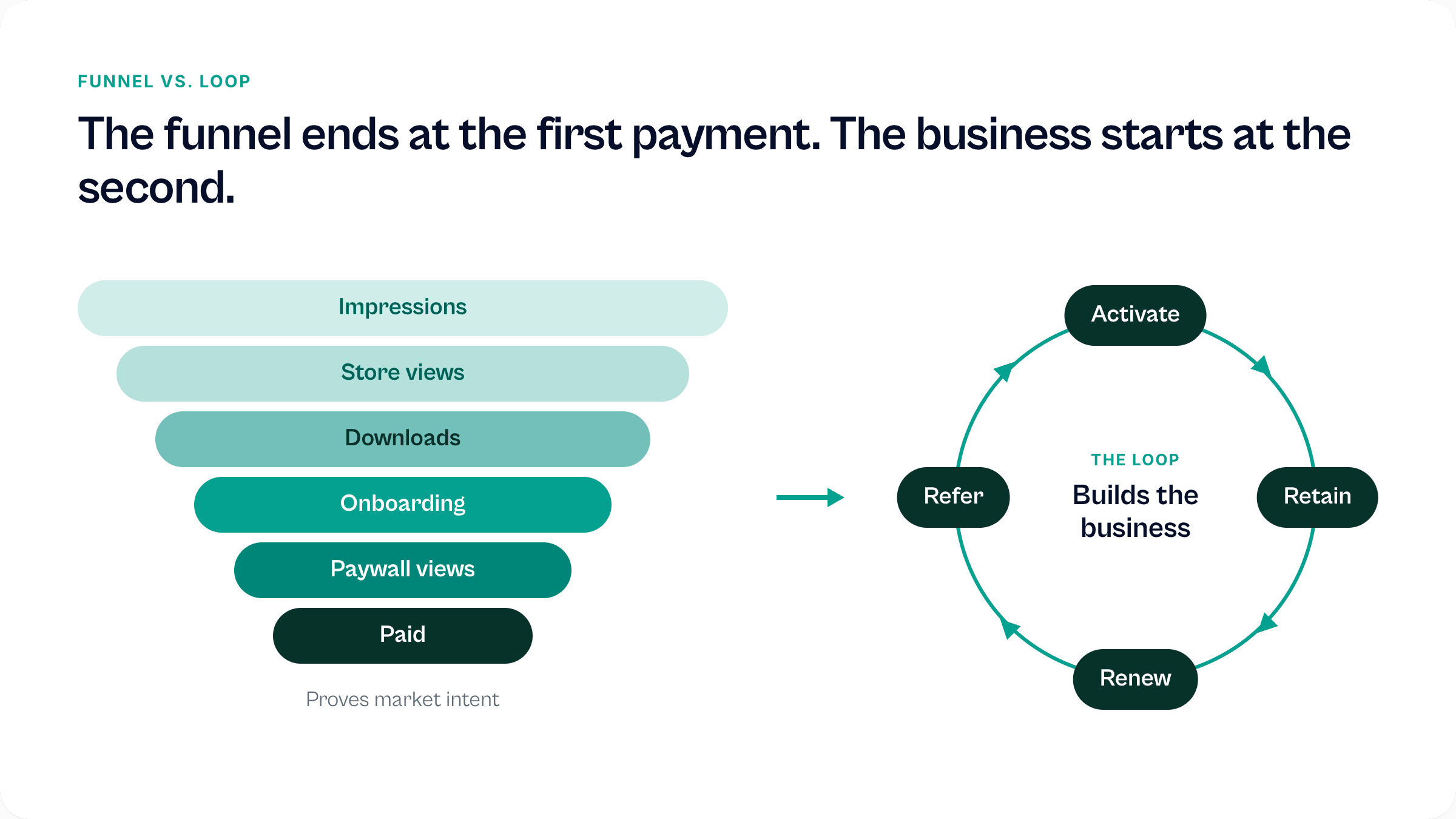
Funnels prove market intent—that you can attract users and persuade them to pull out a credit card. But look at industry subscription benchmarks one year after initial purchase:
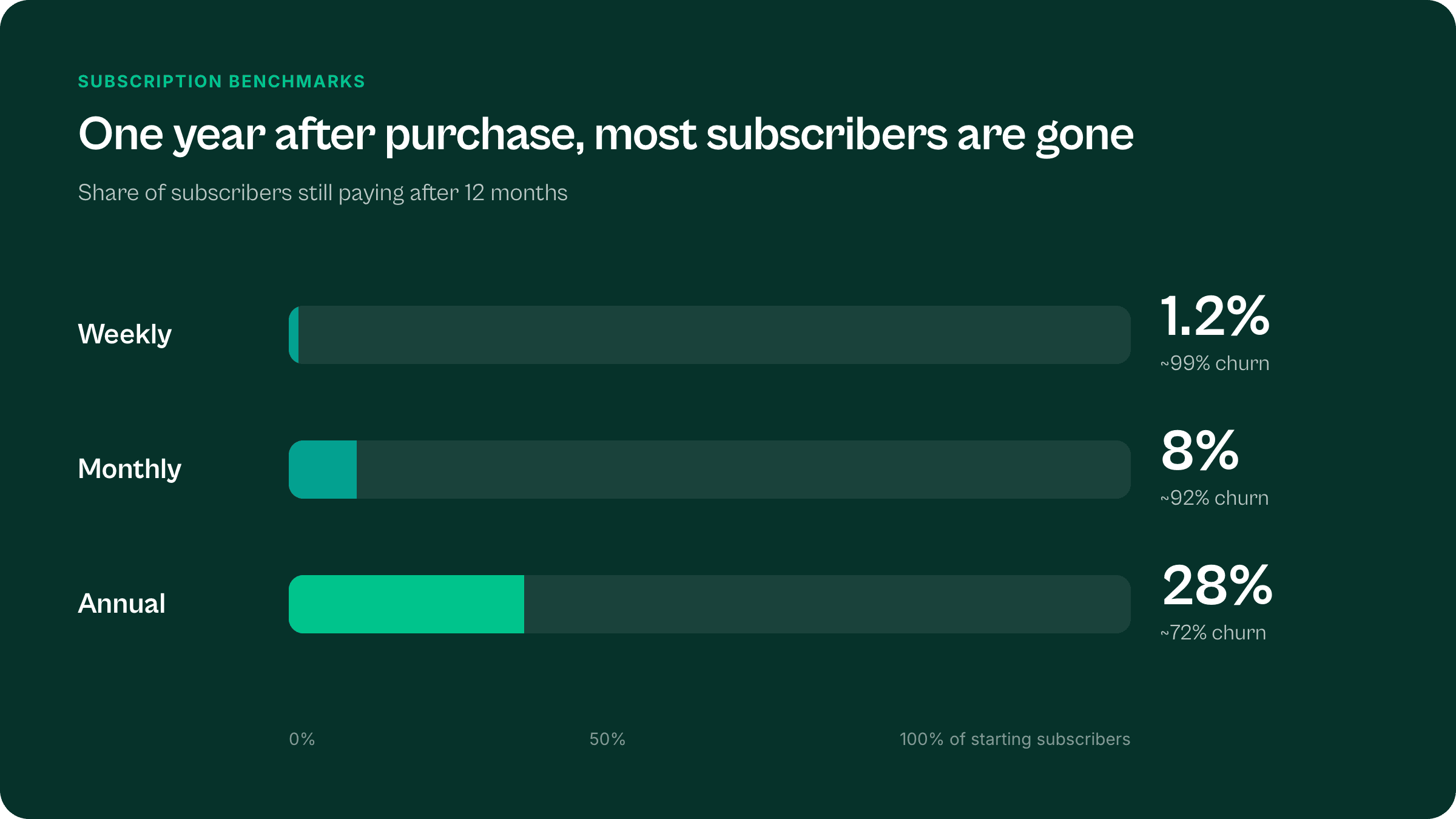
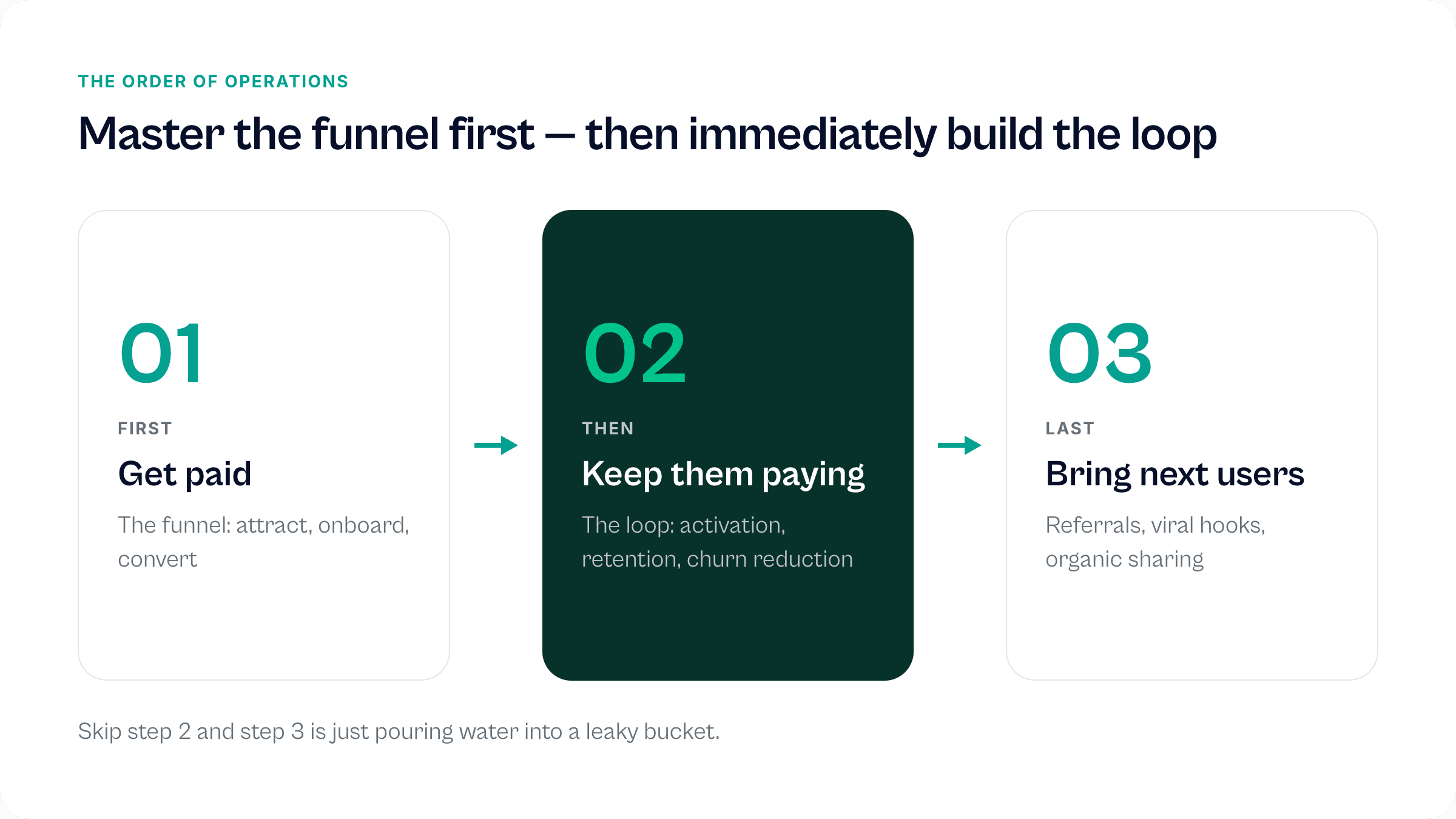
If you try to build referral programs and viral features before you fix retention, you are pouring water into a leaky bucket. Master the funnel first—then immediately build the loop.
2. Segment by “Job to Be Done,” Not Demographics
You cannot treat every user the same at scale. Two people of the same age and location might download a running app for completely different reasons.
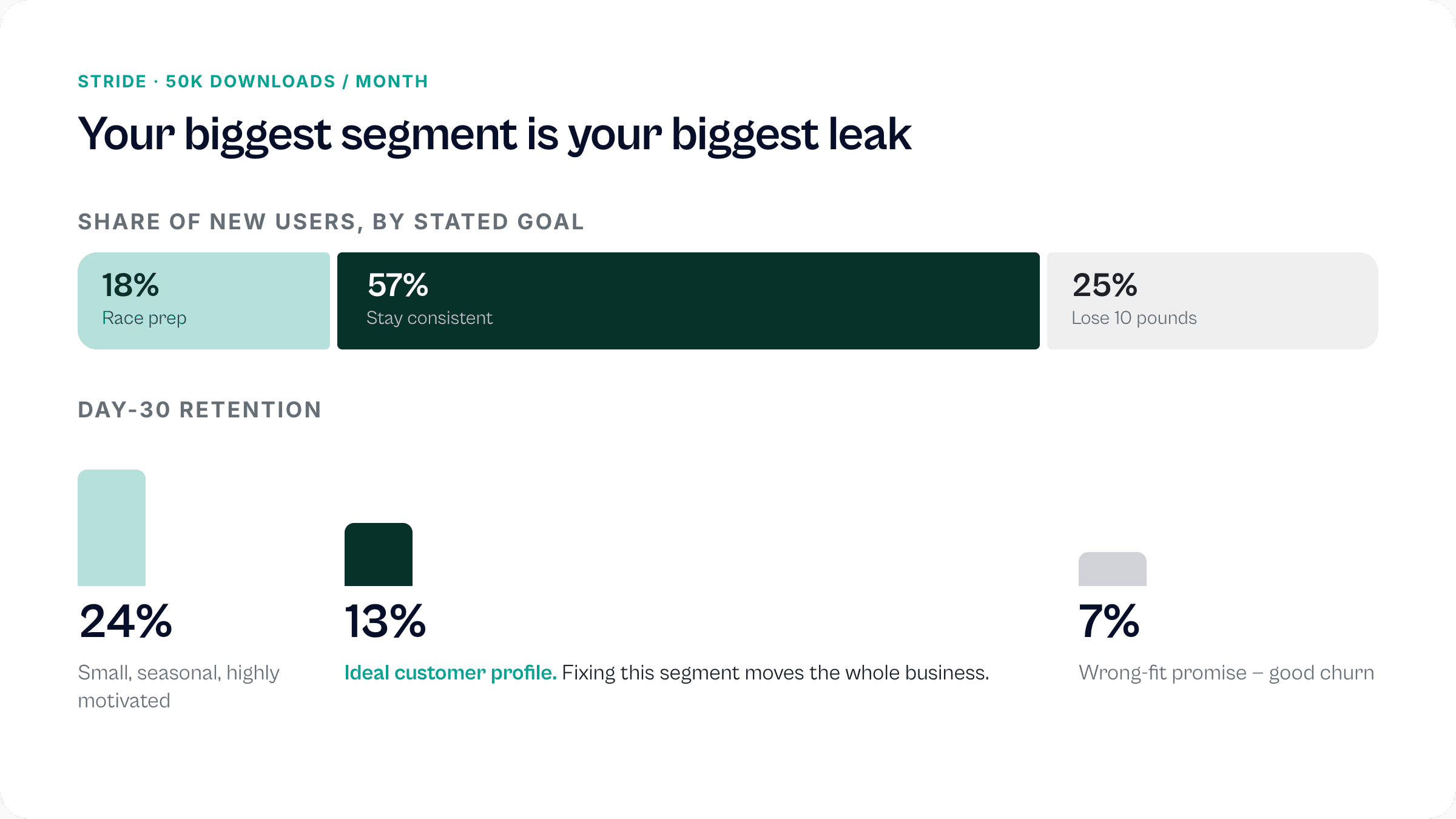
Consider an illustrative fitness app, Stride (50,000 downloads/month, $9.99/month, flat revenue):
The Action Item:
Ask users their primary goal during onboarding.
- Embrace good churn: The “Lose 10 Pounds” cohort has a 7% retention rate because a pure running tracker doesn’t address diet. Churn here is natural—stop wasting product cycles trying to save bad-fit users.
- Focus on your core ICP: The “Stay Consistent” group represents 57% of users, but only retains at 13%. Fixing leaks for this segment will transform the unit economics of the entire business.
3. Engineer the “Aha!” Moment into Day 0
84% of 3-day trial cancellations happen on Day 0 or Day 1.
If users don’t experience the core value of your product almost immediately, they will cancel before the trial converts.
Every successful platform has identified its Activation Metric:
- Facebook: Adding 7 friends in 7 days.
- Slack: Sending 2,000 team messages.
- WhisperFlow (voice-to-text): Dictating the first 200 words.
- Stride (running app): Logging a first run within 48 hours.
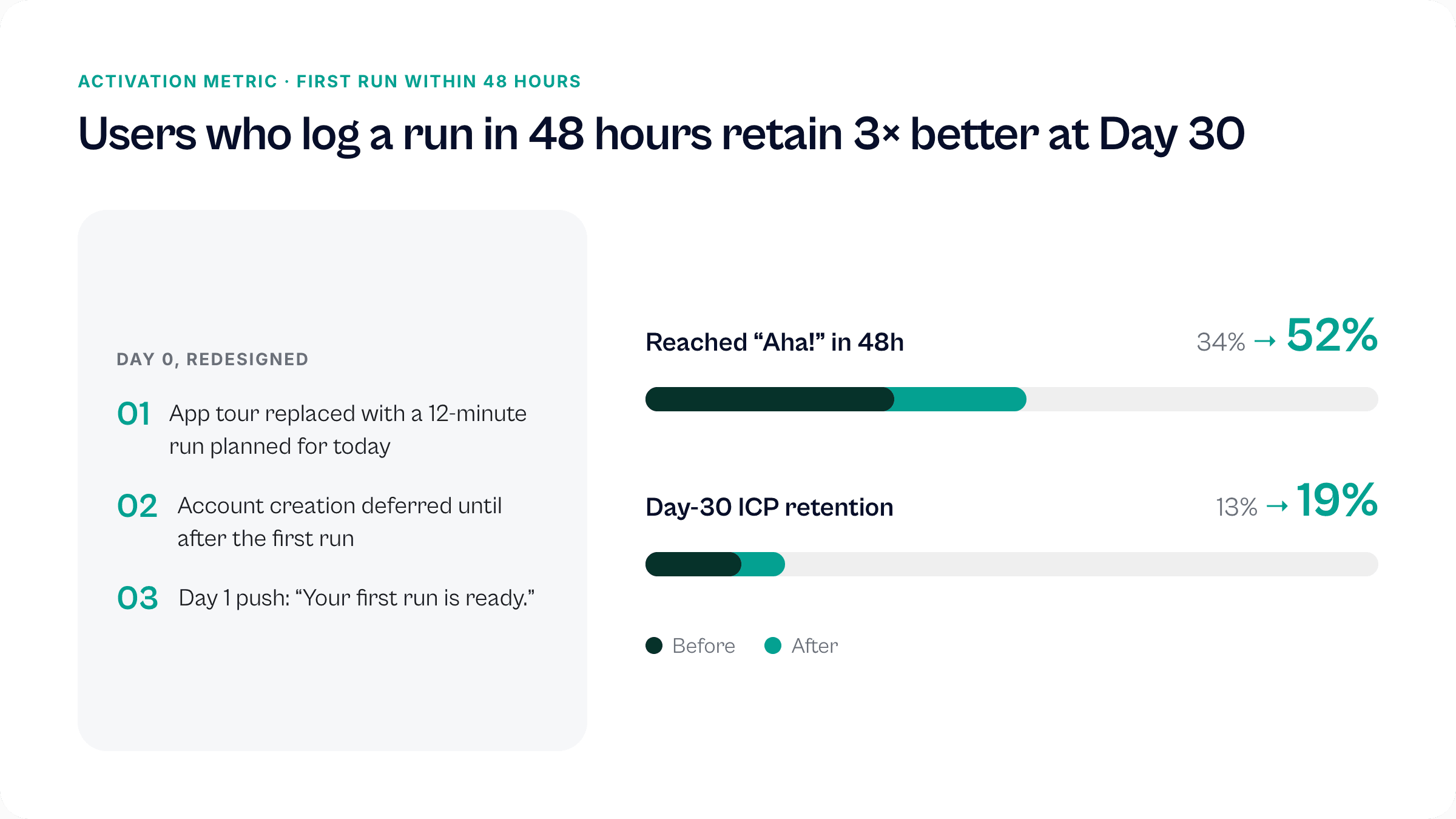
Rule of thumb: Strip away full feature tours, extensive profile setups, and settings pages on launch. Design the entire Day 0 user experience around getting the user to complete their single “Aha!” action.
4. Match Retention to Natural Cadence (Stop Forcing Daily Streaks)
Many apps blindly copy Duolingo’s daily streak mechanics. But if your app’s core activity does not naturally happen daily, daily streak reminders will trigger uninstalls.
Use the Cadence Framework to align notifications and streaks with real-world behavior:
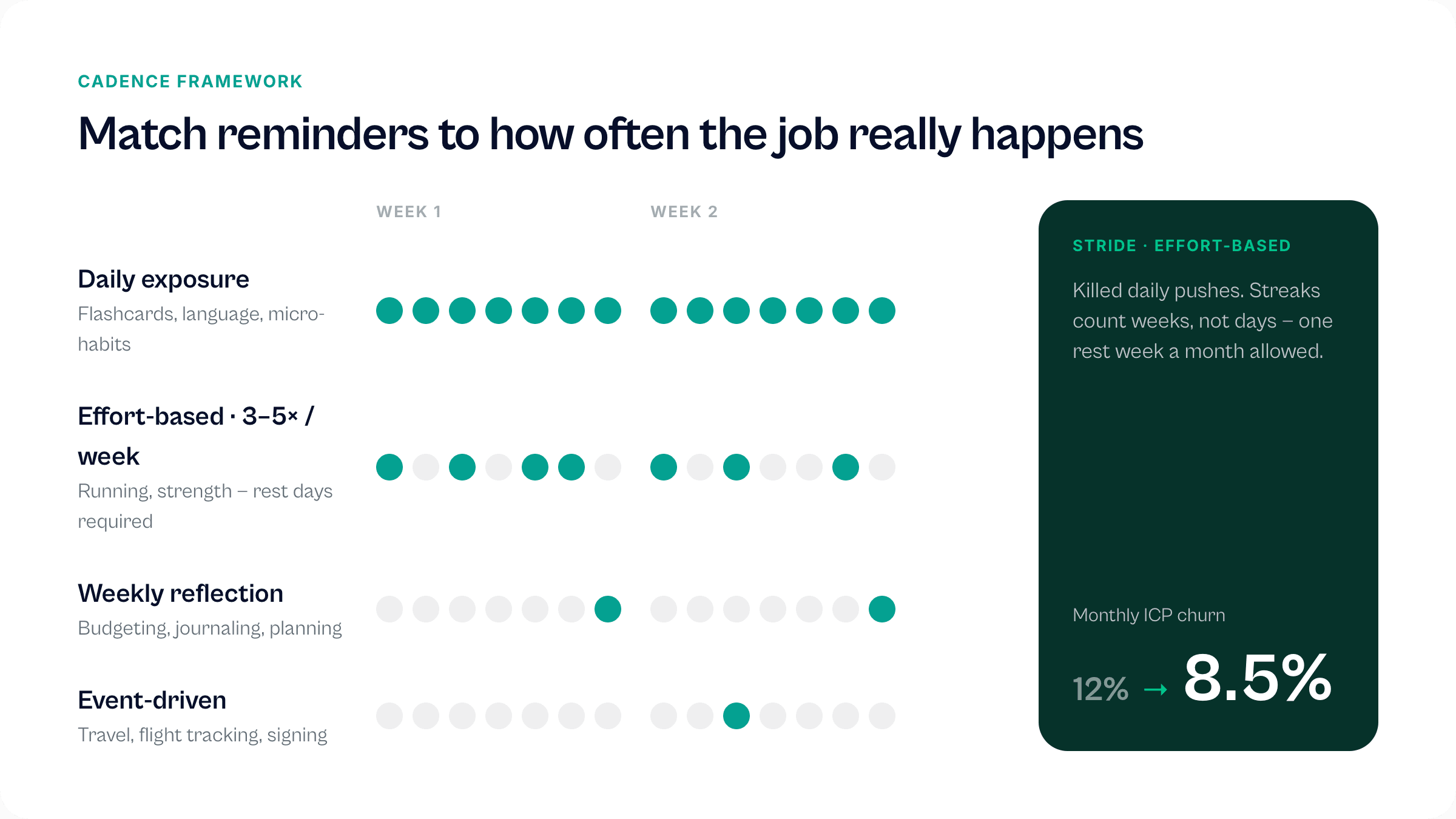
How Stride Redesigned Its Habit Loop:
- Killed daily “Time to run!” push notifications.
- Let users select their preferred running days and times during onboarding.
- Measured streaks by weeks completed (e.g., “3 runs per week for 3 weeks”), allowing one rest week per month without resetting streaks.
- Introduced a Sunday Recap and a home-screen widget showing weekly progress.
Result: Monthly ICP churn dropped from 12% to 8.5%.
5. Capture Delayed Intent in Freemium Apps
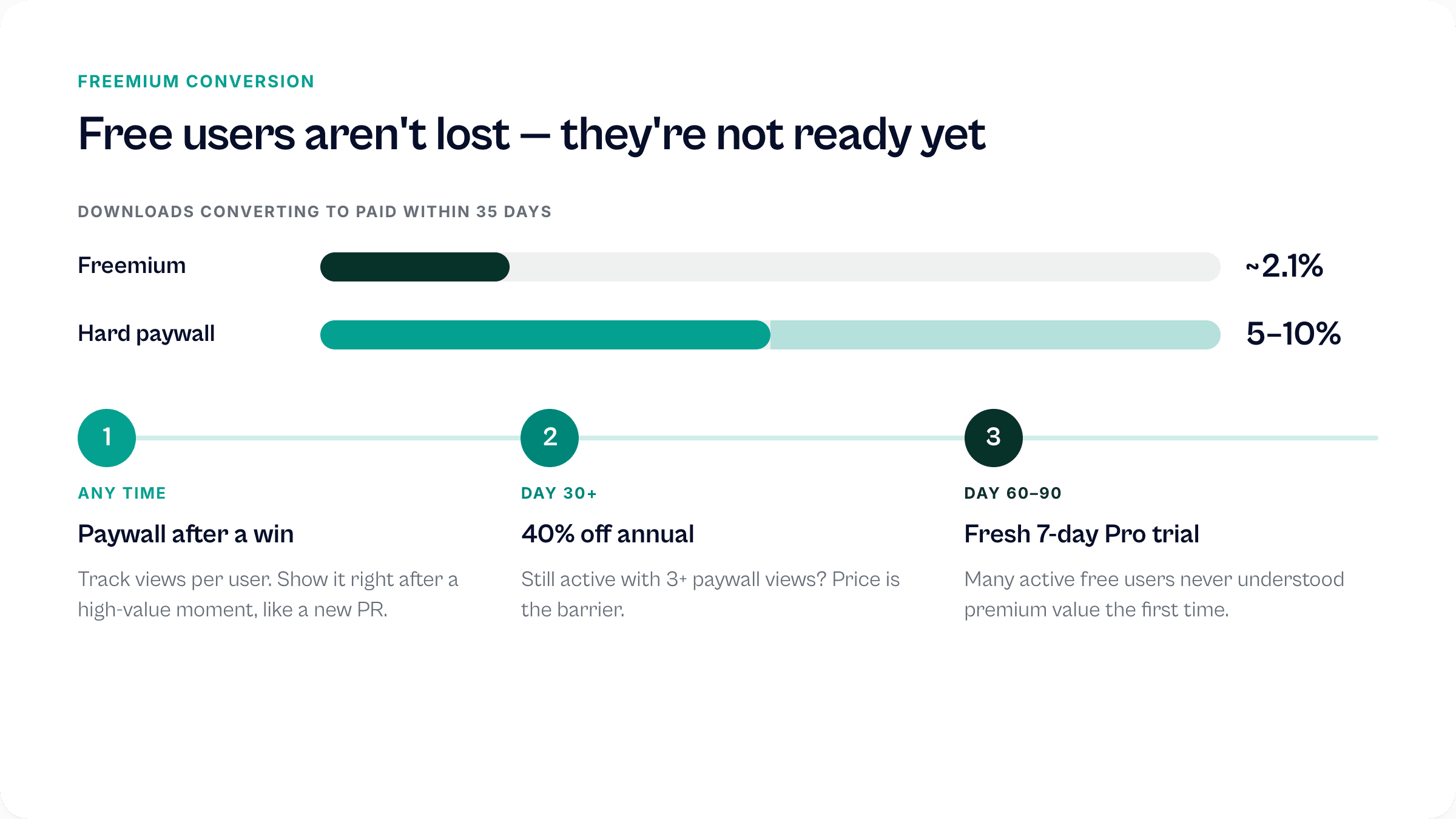
Not every user is ready to pay on Day 1. In freemium apps, only ~2.1% of downloads convert within 35 days (compared to 5–10% on hard paywalls). That means you must continuously earn conversion over time.
Tactics for Monetizing Free Active Users:
- Track Paywall Views per User: Do not display the paywall at random. Show it immediately following an accomplishment or a moment of high value (e.g., setting a new personal record).
- Automate Repeat-View Discounts: If a free user remains active after 30 days and has viewed the paywall 3+ times, price is likely their barrier. Offer a targeted 40% discount on the annual plan.
- Re-Trigger Free Trials: At Day 60 or 90, offer active free users a fresh 7-day trial of Pro features. Many never fully understood premium value during their first session.
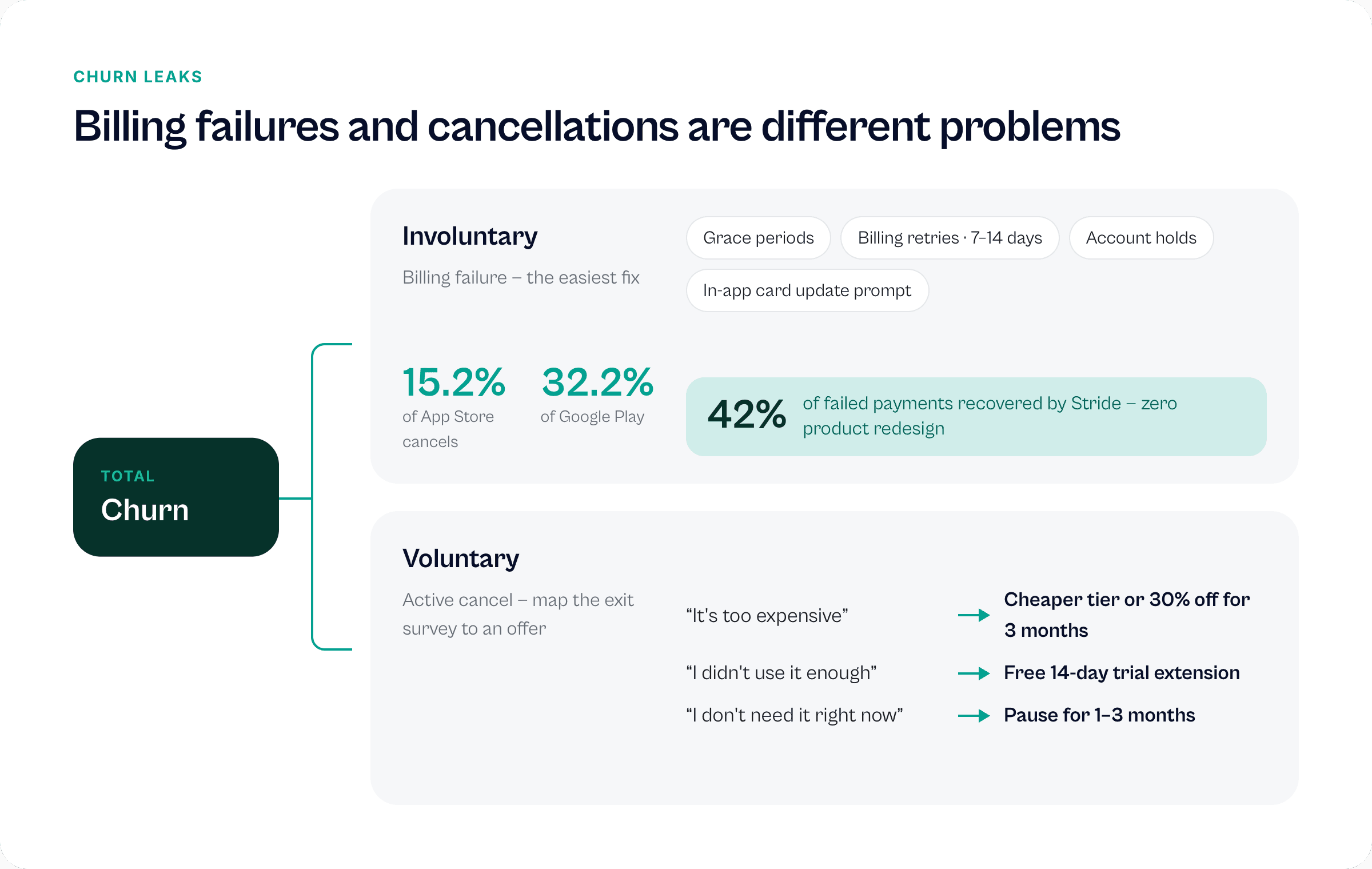
6. Differentiate Involuntary vs. Voluntary Churn
Lumping all cancellations into one “churn” bucket makes it impossible to solve. Treat billing failures and deliberate cancellations as separate problems.
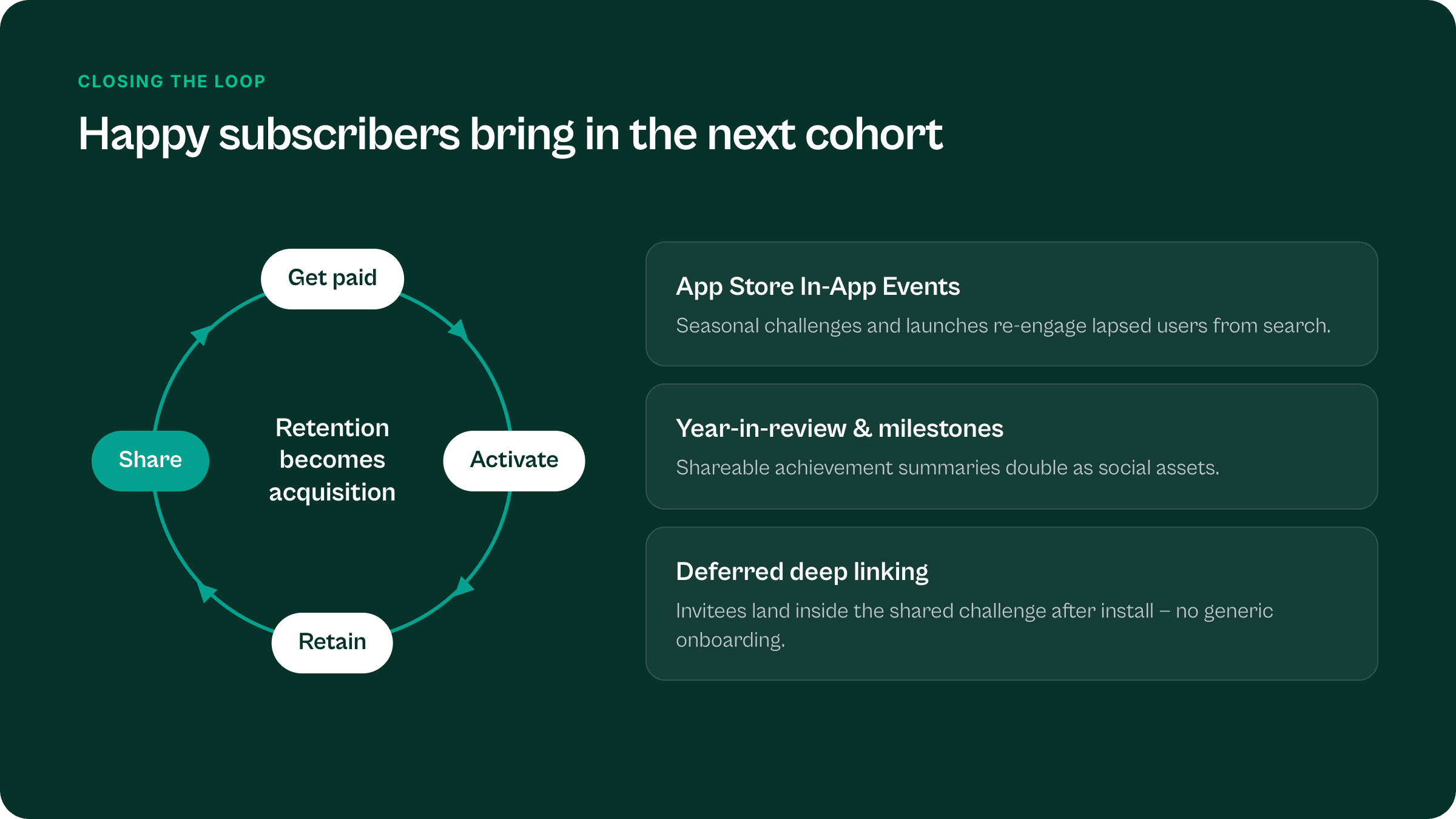
7. Turn Retention into Acquisition (Closing the Loop)
Once your product retains users, build mechanics that allow happy subscribers to bring in the next cohort organically:
- Event-Driven App Store Events: Use App Store Connect’s In-App Events for seasonal challenges, feature releases, or New Year campaigns. These re-engage lapsed users directly from the App Store search feed.
- Year-in-Review & Milestones: Follow the “Spotify Wrapped” model. Create highly visual, shareable summaries of user achievements that serve as natural social media assets.
- Deferred Deep Linking: When an active user invites a friend to a shared challenge or workout plan, deferred deep links ensure the invitee lands directly inside that specific challenge after downloading the app—bypassing generic onboarding confusion.
Summary: The 5 Rules of Building the Loop
- Build the funnel first, then shift to the loop. You can’t retain users you haven’t yet learned how to acquire.
- Activation beats retention. Identify the single action that predicts long-term value and redesign Day 0 around it.
- Segment by Job to Be Done. Find your ICP, build for their natural rhythm, and stop optimizing for bad-fit users.
- Fix involuntary churn immediately. Billing recovery tools are the highest-ROI retention work you will ever do.
- Match frequency to reality. Respect your user’s natural habit cadence—streaks and push notifications should encourage, not spam.