Moving Design Conversations Beyond Opinions
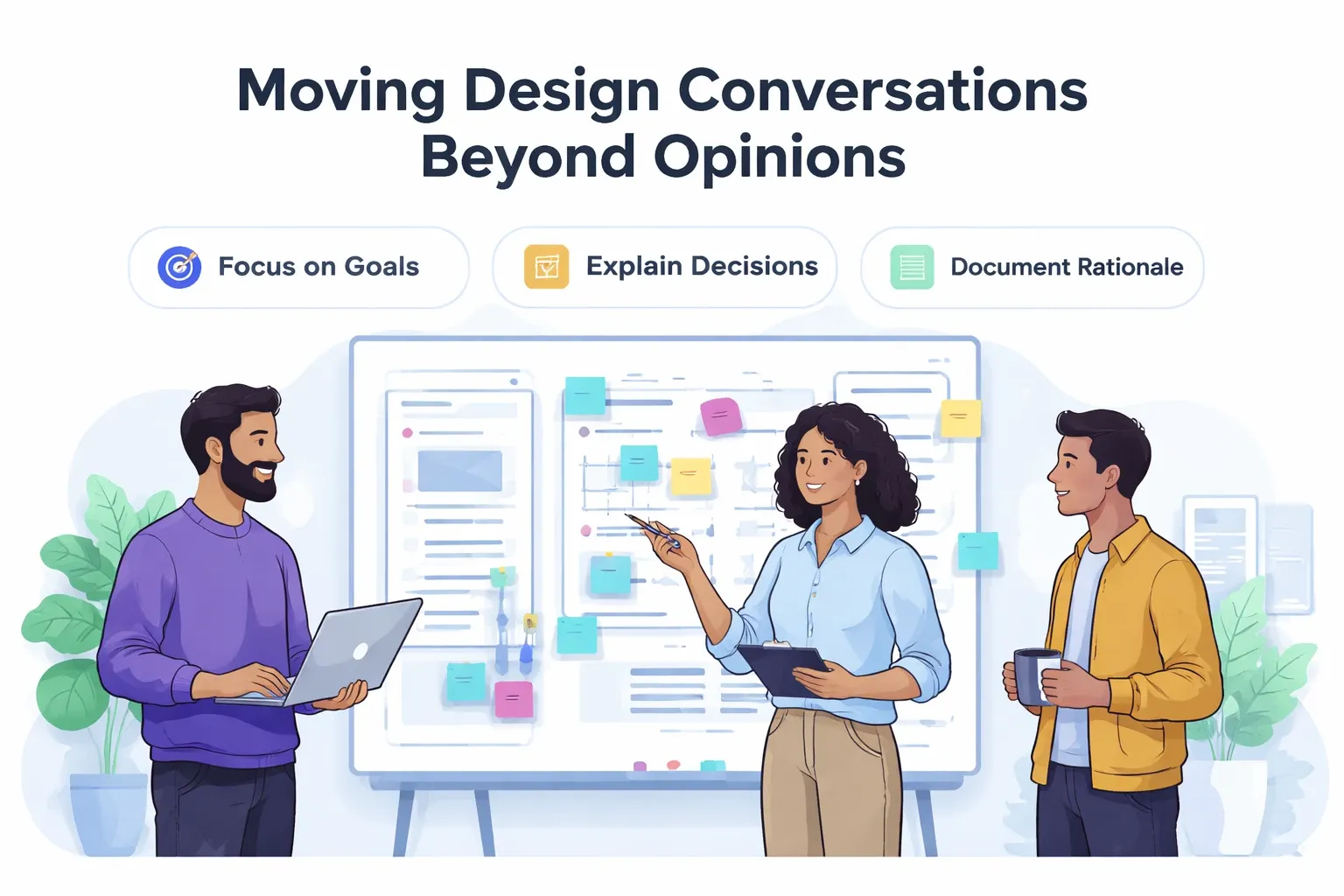
Moving Design Conversations Beyond Opinions

Moving Design Conversations Beyond Opinions

By

Maro De Guzman

Published on:

Jan 14, 2026

Design conversations often stall, not because people disagree, but because the discussion is framed around opinions instead of outcomes.

Comments like “I don’t like this” or “Can we try another version?” are common, but they rarely clarify what is actually at risk: usability, efficiency, or business goals.

In the book Articulating Design Decisions, Tom Greever makes a simple but powerful point: design isn’t about defending visuals, it’s about explaining decisions. That principle is foundational in how the Flywheel team works.

Shifting the Conversation

We present designs with context, not just screens. Every review starts with questions like:

  • What problem are we solving?


  • Who is the user at this moment?


  • What constraints are shaping the solution?


For example, when designing a scheduling interface for a service-management platform, the discussion wasn’t about which layout looked cleaner. The focus was on how a dispatcher could scan conflicts and assign jobs in under a minute. Once that goal was clear, decisions around layout, color, and hierarchy became easier to align on.

Making Decisions Visible

We document design rationale directly in our files, including interaction notes, edge cases, and why certain patterns were chosen. This small habit reduced back-and-forth during development. Engineers understood the intent, and stakeholders felt confident signing off.

By explaining decisions instead of defending them:

  • Feedback become more specific and actionable


  • Design reviews are shorter and more focused


  • Teams stop revisiting the same debates across sprints


Most importantly, design became a shared decision-making process rather than a subjective critique.

Why It Matters

For business leaders, this approach reduces friction and rework. When teams understand why a decision exists, alignment happens faster and products move forward with confidence. Good design isn’t just polished. It is explainable. When teams can clearly articulate their decisions, design becomes a strategic asset rather than a subjective exercise.

Design maturity isn’t about how polished the UI looks. It’s about how confidently a team can explain why it exists.

Design conversations often stall, not because people disagree, but because the discussion is framed around opinions instead of outcomes.

Comments like “I don’t like this” or “Can we try another version?” are common, but they rarely clarify what is actually at risk: usability, efficiency, or business goals.

In the book Articulating Design Decisions, Tom Greever makes a simple but powerful point: design isn’t about defending visuals, it’s about explaining decisions. That principle is foundational in how the Flywheel team works.

Shifting the Conversation

We present designs with context, not just screens. Every review starts with questions like:

  • What problem are we solving?


  • Who is the user at this moment?


  • What constraints are shaping the solution?


For example, when designing a scheduling interface for a service-management platform, the discussion wasn’t about which layout looked cleaner. The focus was on how a dispatcher could scan conflicts and assign jobs in under a minute. Once that goal was clear, decisions around layout, color, and hierarchy became easier to align on.

Making Decisions Visible

We document design rationale directly in our files, including interaction notes, edge cases, and why certain patterns were chosen. This small habit reduced back-and-forth during development. Engineers understood the intent, and stakeholders felt confident signing off.

By explaining decisions instead of defending them:

  • Feedback become more specific and actionable


  • Design reviews are shorter and more focused


  • Teams stop revisiting the same debates across sprints


Most importantly, design became a shared decision-making process rather than a subjective critique.

Why It Matters

For business leaders, this approach reduces friction and rework. When teams understand why a decision exists, alignment happens faster and products move forward with confidence. Good design isn’t just polished. It is explainable. When teams can clearly articulate their decisions, design becomes a strategic asset rather than a subjective exercise.

Design maturity isn’t about how polished the UI looks. It’s about how confidently a team can explain why it exists.

Book an introductory call

We'd love to hear about what you're working on…

© 2025 Flywheel

Book an introductory call

We'd love to hear about what you're working on…

© 2025 Flywheel

Book an introductory call

We'd love to hear about what you're working on…

© 2025 Flywheel

Book an introductory call

We'd love to hear about what you're working on…

© 2025 Flywheel