The State of Vibe Coding: February 2026
The State of Vibe Coding: February 2026

The State of Vibe Coding: February 2026

By

Erik Goins

Published on:

Feb 3, 2026

This is a small departure from my usual writing. We’ve been so focused on Go-to-Market strategies for mobile and AI-powered applications recently that it feels backwards to start talking about development again. But the two go hand in hand. Here is why.
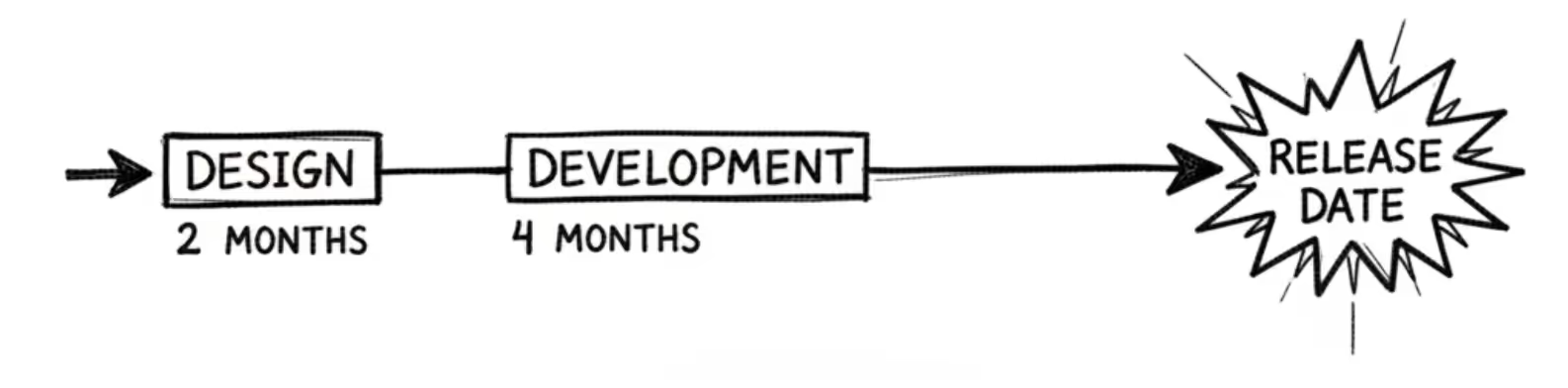
Historically, software development has looked a lot like the image above—and for good reason.


The Case for Design First

First, designing a product before development is a massive investment in clarity. At Flywheel, we will not give a client a fixed-price quote for comprehensive, feature-complete applications until they go through our Discovery & Design process. This typically takes 4–8 weeks depending on complexity.

During this process, entire user journeys are removed, added, and remolded to arrive at a final product. While this costs thousands of dollars in the design phase, fixing these issues during development would cost tens of thousands. It is money well spent.

Secondly, we don’t believe in quoting a project until UI and technical designs are complete. It’s like a builder giving you a quote to build a house without seeing the blueprints. If they do, they are either making massive assumptions about what you want, or they are taking the easiest path to completion. In either case, they aren’t adding the value you expect from an architect—including challenging you to build a better house.

Feature Complete vs. MLP
I’ll pause here to note a distinction. At Flywheel Studio, we typically develop two types of applications: Feature Complete and Minimum Lovable Products (MLPs).

Feature Complete products need a full Discovery & Design process. It never pays to skimp here. However, MLPs usually don’t require full Discovery & Design and can actually be hampered by it. For these, we normally run a one-week design sprint.


Enter Stage Left: Vibe Coding

Now, back to our original topic: the state of vibe coding in January 2026.

Flywheel Studio has always been at the leading edge of "vibe coding," even before the term existed. Before AI, we used no-code platforms like Adalo. When visual development became a feasible alternative, we switched to FlutterFlow. Naturally, as AI improves, we are integrating it, too.

We are 100% focused on developing better products and will gladly use any tool—AI or otherwise—to get there. Today, AI-driven software development has reduced development times for smaller projects by up to 50%. This is an incredible improvement in time-to-market.

Projects that typically took 3–4 months are now being deployed in two.
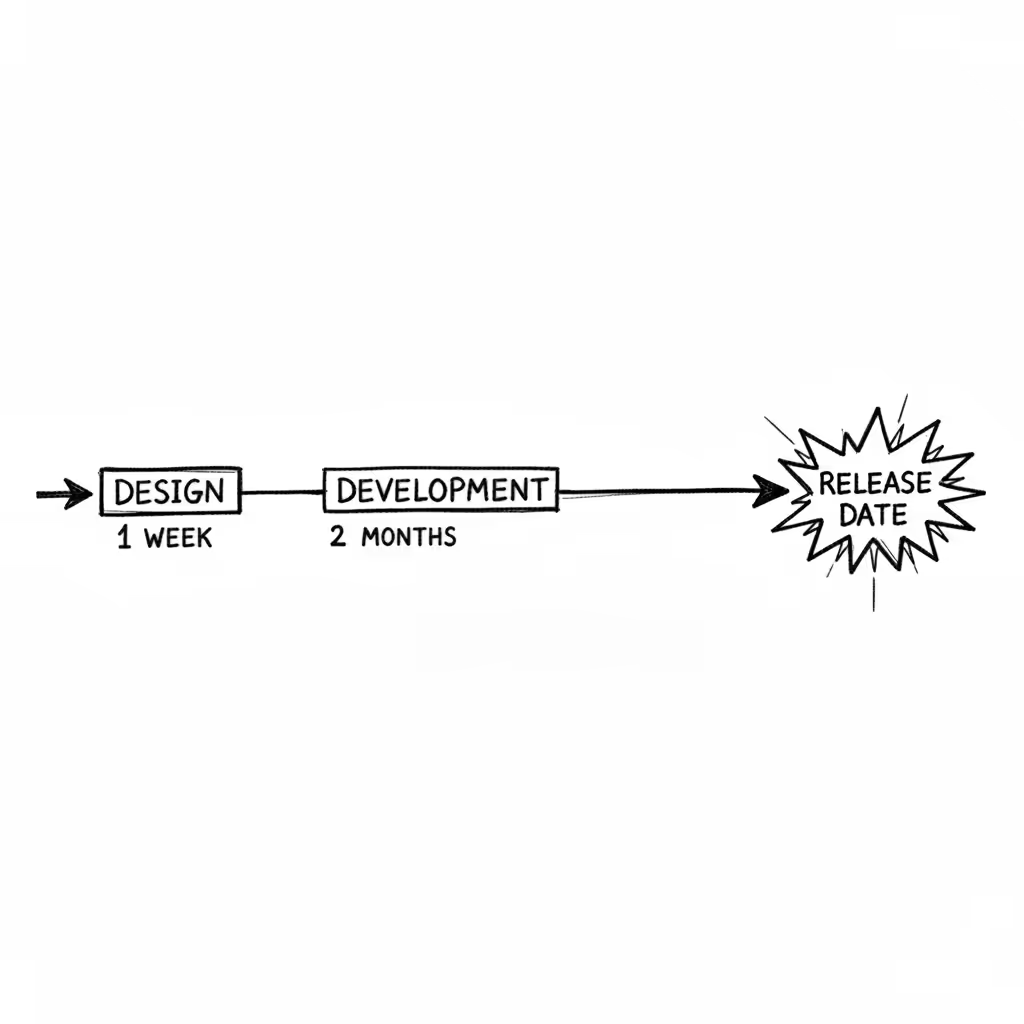
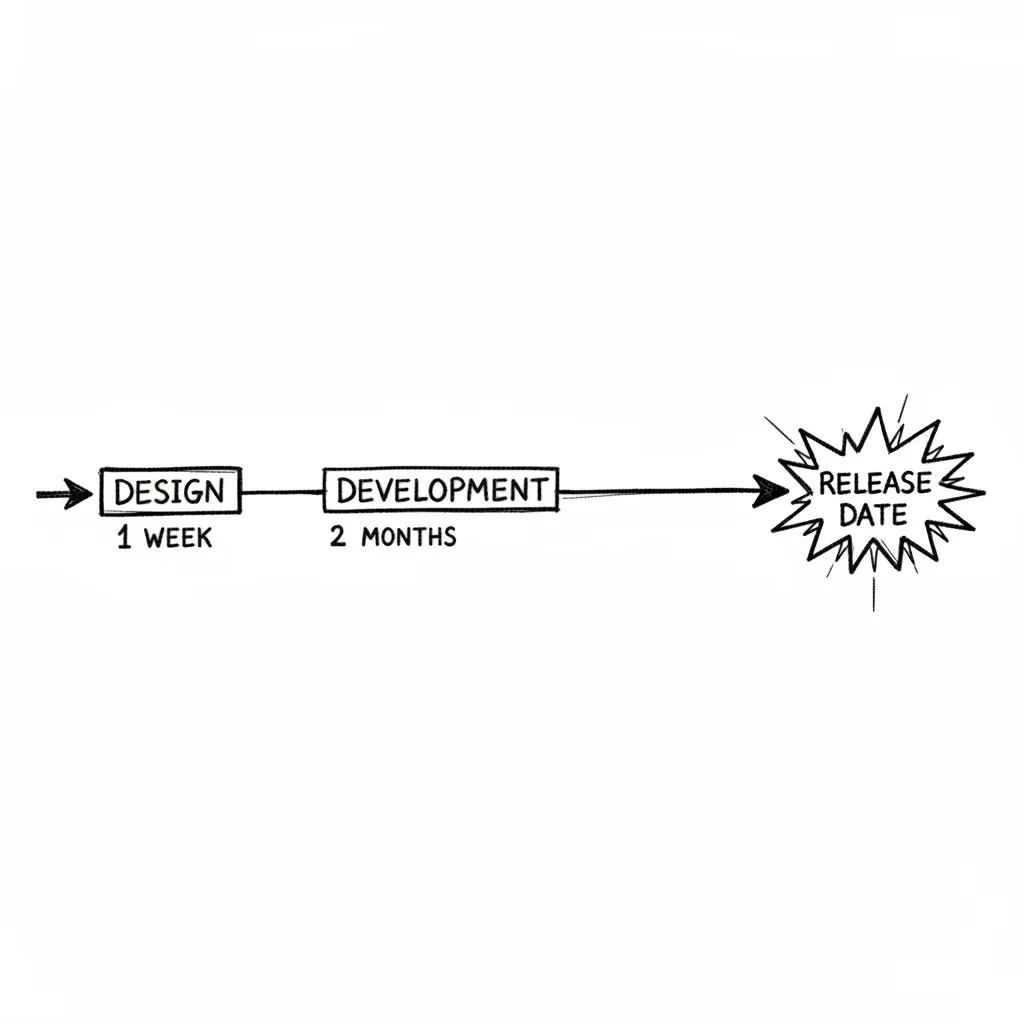
This reinforces the power of the MLP. You can now ship that key feature to test the market significantly faster. Creating a tight feedback loop—release, get feedback, iterate—is the single best competitive advantage a startup can have.

A Note on Budgeting: It is too common for founders to believe they will develop an application once and it will be "done." That is almost never the case. We’ve seen startups pivot a dozen times before finding the right fit. Don’t be afraid to change based on market feedback, and save your budget for these iterations. If you blow your budget on the initial build, you only have one shot to get it right—and that is exceptionally rare.


Vibe Coding Isn’t the Answer For Everything

While Twitter (X) and LinkedIn seem to believe vibe coding is the only solution we need, that isn't the reality just yet.

First, quality product strategy is absolutely required. I’m surprised anyone thought this would go away. Anyone can develop a product, but few people have great ideas or meaningful improvements on existing solutions. We love opinionated founders who bring a unique perspective to a problem and a simple way to address it. That remains the recipe for success.

Secondly, vibe coding complex applications isn’t quite there yet—at least not at a risk level we are willing to accept. For MLPs, we are currently "vibe coding" with significant guardrails. But when we look at our more complicated applications, we don’t yet have faith that we could "copy-paste" them with AI.

Part of the issue is how vibe coding works. Because you rely on AI to make countless seemingly small decisions, it is difficult to verify if you (or the AI) made the right choices until late in the project. You might realize after a month of work that you’ve built on a flawed foundation and have to restart. For a small app, this might be acceptable. For a large application, it is an unacceptable risk.

We do expect models and the tools they use (like Ralph) to improve over time and close this gap.


Vibe Coding Design: Welcome to Bland Land

I also want to touch on how vibe coding is changing design. Whenever I see a new product online, I can instantly tell if it was vibe coded. It looks good, but never great. In a world of soon-to-be millions of vibe coded apps, the aesthetic is evolving from "good" to "generic and bland."

To some extent, we are okay with this. If you are reducing your design process from two months to one week, you have to assume you are cutting corners. That is fine for a V1.

The shift happening now is that designers need to work from a semi-completed product. Their job is to first apply a unique look and feel, and second, drive strategic optimizations. This is where the real value lies.

Design, much like development, used to be stuck in the details. Developers were manually writing boilerplate code; designers were tweaking Figma files until their eyes burned.

But what if designers spent those hours thinking about how Product-Led Growth (PLG) can optimize the onboarding process? Or how to create virality through a gamified invite flow?

That sounds much better. And on top of that, you are refining a product that actually exists, rather than guessing from scratch.


When the Tide Goes Out, Who Has a Bathing Suit?

To close, vibe coding is accelerating everything: product, development, and design. Now, opinions matter. We are finally seeing who actually has good ideas.

  • If you were a product manager who got by pushing tasks across a Kanban board, you’re not going to make it.

  • If you’re a developer who doesn’t know system design and only codes small functions, you’re not going to make it.

  • If you’re a designer without an opinion or a strategy, you’re not going to make it.

This is awesome for all of us. Now, people can do what they should be doing. While vibe coding’s impact as of January 2026 is still limited in our opinion, a sea change is coming. 

Put on a bathing suit and hop in.

This is a small departure from my usual writing. We’ve been so focused on Go-to-Market strategies for mobile and AI-powered applications recently that it feels backwards to start talking about development again. But the two go hand in hand. Here is why.

Historically, software development has looked a lot like the image above—and for good reason.


The Case for Design First

First, designing a product before development is a massive investment in clarity. At Flywheel, we will not give a client a fixed-price quote for comprehensive, feature-complete applications until they go through our Discovery & Design process. This typically takes 4–8 weeks depending on complexity.

During this process, entire user journeys are removed, added, and remolded to arrive at a final product. While this costs thousands of dollars in the design phase, fixing these issues during development would cost tens of thousands. It is money well spent.

Secondly, we don’t believe in quoting a project until UI and technical designs are complete. It’s like a builder giving you a quote to build a house without seeing the blueprints. If they do, they are either making massive assumptions about what you want, or they are taking the easiest path to completion. In either case, they aren’t adding the value you expect from an architect—including challenging you to build a better house.

Feature Complete vs. MLP
I’ll pause here to note a distinction. At Flywheel Studio, we typically develop two types of applications: Feature Complete and Minimum Lovable Products (MLPs).

Feature Complete products need a full Discovery & Design process. It never pays to skimp here. However, MLPs usually don’t require full Discovery & Design and can actually be hampered by it. For these, we normally run a one-week design sprint.


Enter Stage Left: Vibe Coding

Now, back to our original topic: the state of vibe coding in January 2026.

Flywheel Studio has always been at the leading edge of "vibe coding," even before the term existed. Before AI, we used no-code platforms like Adalo. When visual development became a feasible alternative, we switched to FlutterFlow. Naturally, as AI improves, we are integrating it, too.

We are 100% focused on developing better products and will gladly use any tool—AI or otherwise—to get there. Today, AI-driven software development has reduced development times for smaller projects by up to 50%. This is an incredible improvement in time-to-market.

Projects that typically took 3–4 months are now being deployed in two.

This reinforces the power of the MLP. You can now ship that key feature to test the market significantly faster. Creating a tight feedback loop—release, get feedback, iterate—is the single best competitive advantage a startup can have.

A Note on Budgeting: It is too common for founders to believe they will develop an application once and it will be "done." That is almost never the case. We’ve seen startups pivot a dozen times before finding the right fit. Don’t be afraid to change based on market feedback, and save your budget for these iterations. If you blow your budget on the initial build, you only have one shot to get it right—and that is exceptionally rare.


Vibe Coding Isn’t the Answer For Everything

While Twitter (X) and LinkedIn seem to believe vibe coding is the only solution we need, that isn't the reality just yet.

First, quality product strategy is absolutely required. I’m surprised anyone thought this would go away. Anyone can develop a product, but few people have great ideas or meaningful improvements on existing solutions. We love opinionated founders who bring a unique perspective to a problem and a simple way to address it. That remains the recipe for success.

Secondly, vibe coding complex applications isn’t quite there yet—at least not at a risk level we are willing to accept. For MLPs, we are currently "vibe coding" with significant guardrails. But when we look at our more complicated applications, we don’t yet have faith that we could "copy-paste" them with AI.

Part of the issue is how vibe coding works. Because you rely on AI to make countless seemingly small decisions, it is difficult to verify if you (or the AI) made the right choices until late in the project. You might realize after a month of work that you’ve built on a flawed foundation and have to restart. For a small app, this might be acceptable. For a large application, it is an unacceptable risk.

We do expect models and the tools they use (like Ralph) to improve over time and close this gap.


Vibe Coding Design: Welcome to Bland Land

I also want to touch on how vibe coding is changing design. Whenever I see a new product online, I can instantly tell if it was vibe coded. It looks good, but never great. In a world of soon-to-be millions of vibe coded apps, the aesthetic is evolving from "good" to "generic and bland."

To some extent, we are okay with this. If you are reducing your design process from two months to one week, you have to assume you are cutting corners. That is fine for a V1.

The shift happening now is that designers need to work from a semi-completed product. Their job is to first apply a unique look and feel, and second, drive strategic optimizations. This is where the real value lies.

Design, much like development, used to be stuck in the details. Developers were manually writing boilerplate code; designers were tweaking Figma files until their eyes burned.

But what if designers spent those hours thinking about how Product-Led Growth (PLG) can optimize the onboarding process? Or how to create virality through a gamified invite flow?

That sounds much better. And on top of that, you are refining a product that actually exists, rather than guessing from scratch.


When the Tide Goes Out, Who Has a Bathing Suit?

To close, vibe coding is accelerating everything: product, development, and design. Now, opinions matter. We are finally seeing who actually has good ideas.

  • If you were a product manager who got by pushing tasks across a Kanban board, you’re not going to make it.

  • If you’re a developer who doesn’t know system design and only codes small functions, you’re not going to make it.

  • If you’re a designer without an opinion or a strategy, you’re not going to make it.

This is awesome for all of us. Now, people can do what they should be doing. While vibe coding’s impact as of January 2026 is still limited in our opinion, a sea change is coming. 

Put on a bathing suit and hop in.

Book an introductory call

We'd love to hear about what you're working on…

© 2025 Flywheel

Book an introductory call

We'd love to hear about what you're working on…

© 2025 Flywheel

Book an introductory call

We'd love to hear about what you're working on…

© 2025 Flywheel

Book an introductory call

We'd love to hear about what you're working on…

© 2025 Flywheel