From Food Waste to Food Access: 4mycity, the App Helping Communities Thrive
QR Codes, Compost, and Community: The Platform Reinventing Local Food Programs
The Challenge
4MyCiTy operates at the intersection of food access, sustainability, and community programs. As participation grew across food pickup, composting, donations, and education initiatives, the organization faced increasing operational complexity.
Key workflows — customer check-ins, food distribution, compost drop-offs, donations, and reporting — were heavily manual or fragmented across tools. Staff had limited real-time visibility into participation, drivers lacked a clear system for pickups, and leadership had no centralized way to measure impact across programs.
4MyCiTy needed a single platform that could:
- Support multiple community programs without friction
- Serve customers, drivers, staff, and leadership with different access levels
- Track participation and impact accurately
- Scale responsibly without overengineering
Phase 1 focused on building a strong, extensible foundation.
The Solution
Flywheel partnered with 4MyCiTy to design and build a unified mobile platform that brings community access, operations, and data together in one system.
The result is a role-based application that allows community members to engage with programs easily, staff to manage check-ins and pickups efficiently, and leadership to gain real-time insight into participation, donations, and environmental impact.
Phase 1 intentionally prioritized core workflows, data integrity, and operational clarity, creating a reliable base for future expansion.
A single experience for many roles
4MyCiTy’s platform was designed around clearly defined user roles, each with purpose-built access:
- Community members can view content, register for programs, donate, check in via QR code, request compost pickups, and complete post-pickup surveys.
- Drivers can manage compost pickup requests, claim jobs from a shared queue, and track completed returns.
- Employees can check customers into food and compost programs with limited data visibility.
- Leadership and Admin users can manage content, approve users, review flagged accounts, and oversee operations.
This structure ensures people see only what they need, while sensitive data remains protected.
QR-based check-ins that streamline operations
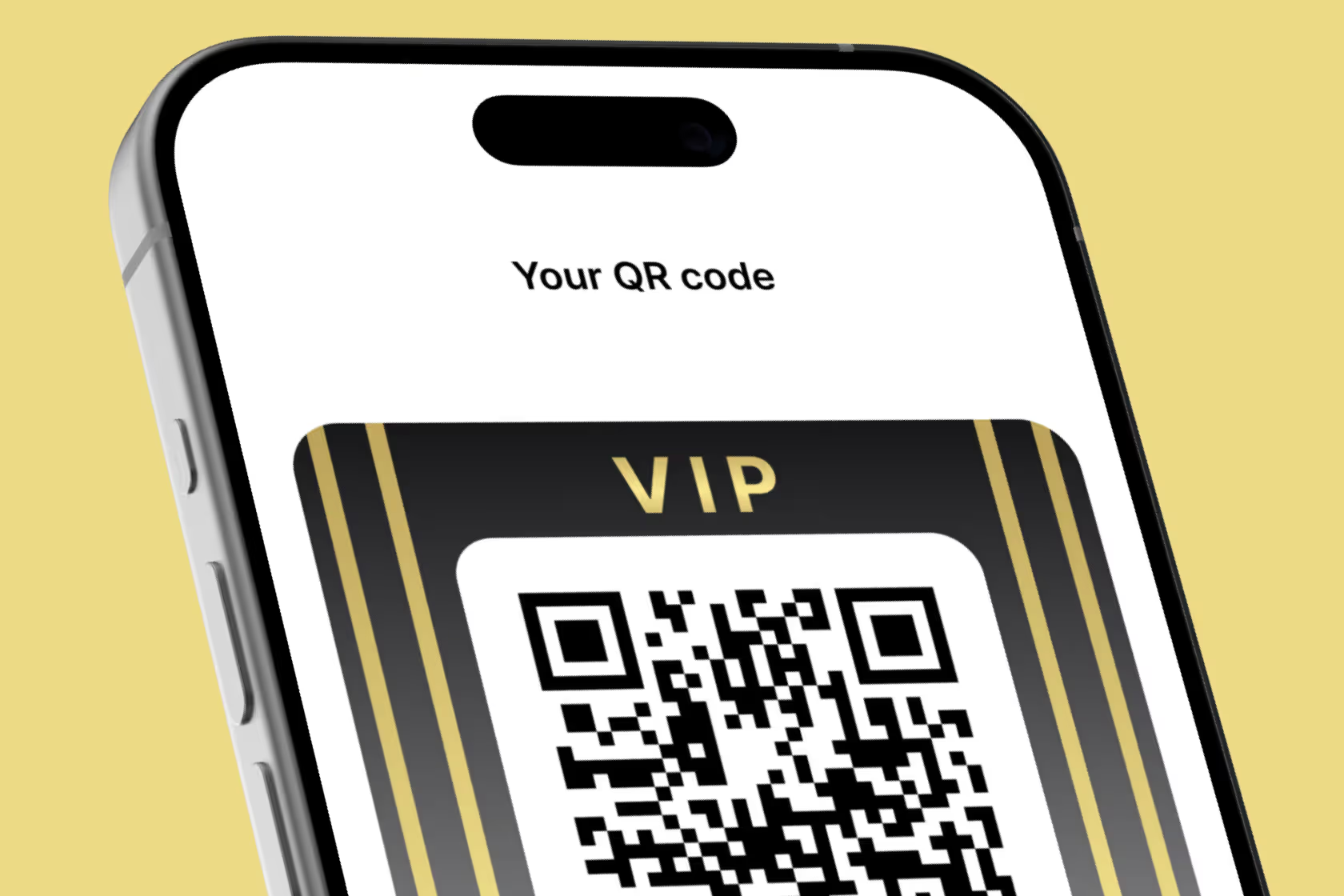
At the center of in-person interactions is a QR-based check-in system.
Customers access a personal QR code directly from the app, which staff can scan to log food pickups, compost activity, and participation. This replaces manual tracking with fast, accurate records while reducing wait times and errors.
Participation tiers are visually reflected in the customer’s digital card, reinforcing engagement without restricting access to core services.
Compost pickup, coordinated end to end
Phase 1 includes a complete workflow for compost pickup and delivery:
- Customers request pickups once they meet minimum bag requirements
- Requests enter a shared pickup queue
- Approved drivers claim and complete pickups
- Returned compost is logged, weighed, and reconciled
Every step updates customer and driver records automatically, creating a reliable system for tracking both service delivery and environmental impact.
Post-pickup feedback and impact tracking
After food pickups, customers receive a follow-up survey to capture what items were received. Leadership controls which items appear in each survey, along with their associated values.
This allows 4MyCiTy to:
- Measure food distribution accurately
- Calculate value saved over time
- Report on program effectiveness with confidence
- The same system supports tracking compost volume and participation trends.
The app includes a feed and news experience that allows 4MyCiTy to share updates, announcements, and external articles in a familiar, scrollable format.
Leadership can draft content for approval, while Admin users can publish directly. This keeps communication centralized and accessible without relying on external platforms.
Data that supports real decisions
A dedicated admin dashboard gives leadership visibility into:
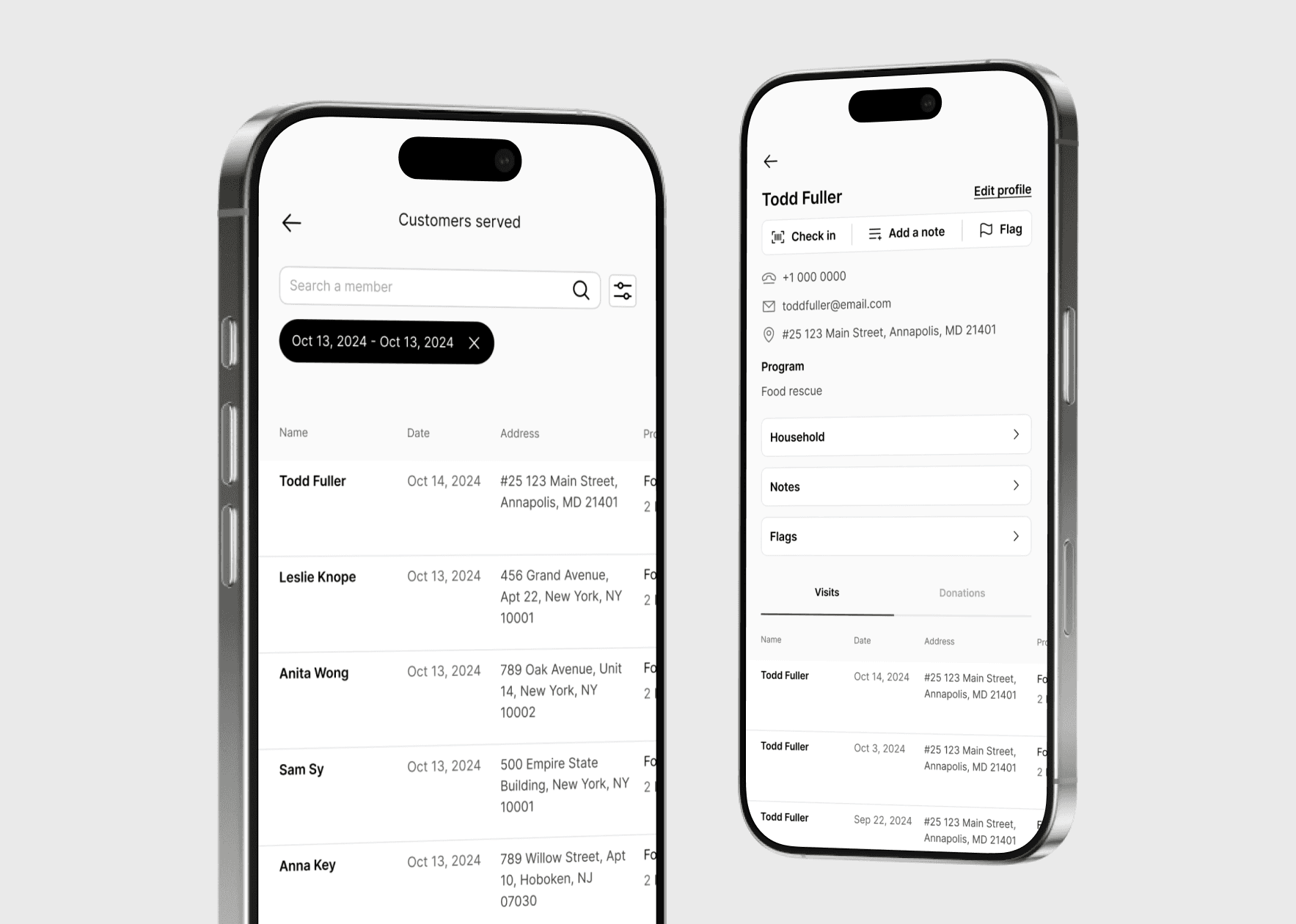
- Customers served (today, recent periods, year to date)
- Donations and registration trends
- Food saved and compost created
- Visit history and participation patterns
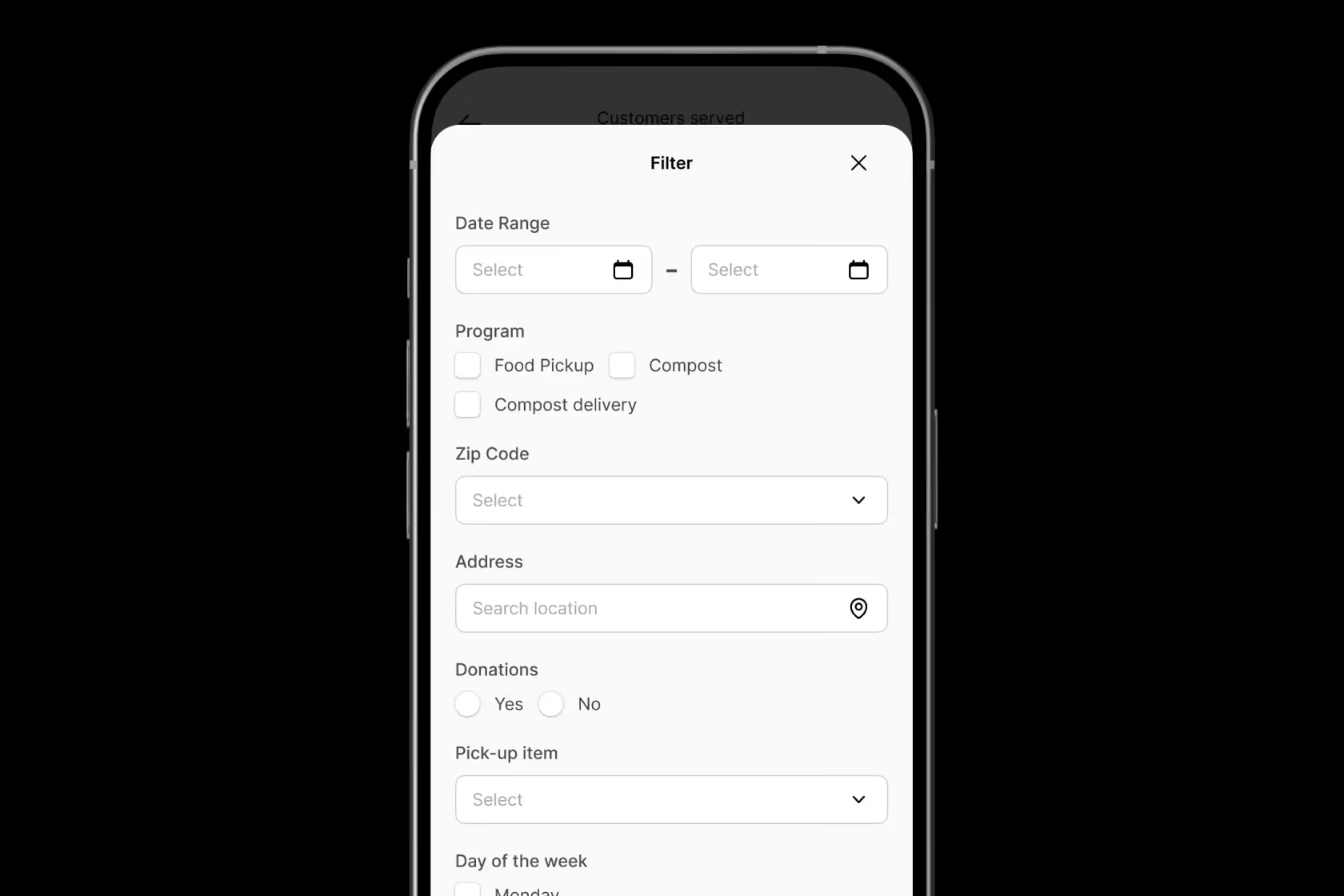
Filters and reports allow teams to analyze data by time period, geography, household attributes, and program involvement — turning day-to-day activity into actionable insight.
What we shipped for 4MyCity.
The app helped 4MyCiTy manage food pickups, compost programs, and donations more efficiently. It reduced manual tracking, improved coordination, and provided real-time data on participation and impact, enabling better decisions and smoother operations across community programs.
Booking Q1 2027 · 2 slots
Book a Free Call